When people think of high paying careers, the medical profession is often the first that comes to mind. Doctors dedicate years to education, training and practice before they begin earning significant salaries. But the real question many people ask is: How much do doctors earn an hour?

The answer is not straightforward because earnings vary greatly depending on specialty, location, work setting and level of experience. Let’s take a closer look at the different factors that determine a doctor’s hourly income.
Average Hourly Earnings of Doctors
In the US, doctors typically make between $90 and $200 per hour. But this number is merely an approximation. While highly specialized doctors can earn much more some primary care physicians may be on the lower end of this spectrum.
Physicians often earn between $200,000 and $400,000 a year which depending on the number of hours worked equates to between $90 and $200 per hour according to surveys and statistics. The fact that many physicians work more hours than the typical 40 hour workweek, however, affects their effective hourly pay.
How Specialty Impacts Doctor Earnings
Specialization is the biggest factor in how much a doctor earns per hour. Here’s a breakdown of some common specialties and their approximate hourly earnings:
- Primary Care Physicians (Family Doctors, Pediatricians, Internists): $90 – $120 per hour
- Emergency Medicine Doctors: $120 – $180 per hour
- Surgeons (General, Orthopedic, Cardiothoracic): $150 – $250 per hour
- Anesthesiologists: $160 – $300 per hour
- Highly Specialized Fields (Neurosurgery, Interventional Cardiology, Orthopedic Surgery): $250 – $400+ per hour
This wide range shows how much specialization matters. Doctors who perform complex surgeries or handle critical conditions tend to earn more than those in general practice.
How Much Do Doctors Earn an Hour?
Location and Demand
Another factor that affects how much doctors earn per hour is geographic location. For example:
- Doctors working in states with high living costs like California, New York or Massachusetts may earn higher salaries.
- Rural areas facing physician shortages often offer higher hourly pay or incentives to attract doctors.
- Internationally, the hourly rate for doctors varies dramatically. In countries with universal healthcare systems, like the UK or Canada, doctors may earn less per hour compared to U.S. physicians, but they often have more job stability and benefits.
Experience and Reputation
A doctor’s experience level plays a critical role in determining their hourly income. Newly graduated doctors, particularly those still in residency or fellowship programs, typically earn far less than fully licensed physicians. When their long and often exhausting shifts are broken down into hourly wages. some residents may make under $20 per hour, despite working 60–80 hours per week.
However, once doctors complete residency, gain board certifications and begin practicing independently, their earnings increase substantially. With each year of experience physicians not only refine their clinical skills but also build stronger patient relationships and professional reputations which can translate into higher pay.
Doctors with 10 or more years of practice often reach the upper end of the earning scale especially if they own a private practice, lead a specialty clinic or hold hospital leadership positions. Patients are generally more willing to pay premium rates for experienced doctors with proven track records of success.
https://www.healthcareers.nhs.uk/explore-roles/doctors/pay-doctors
Work Setting and Employment Type
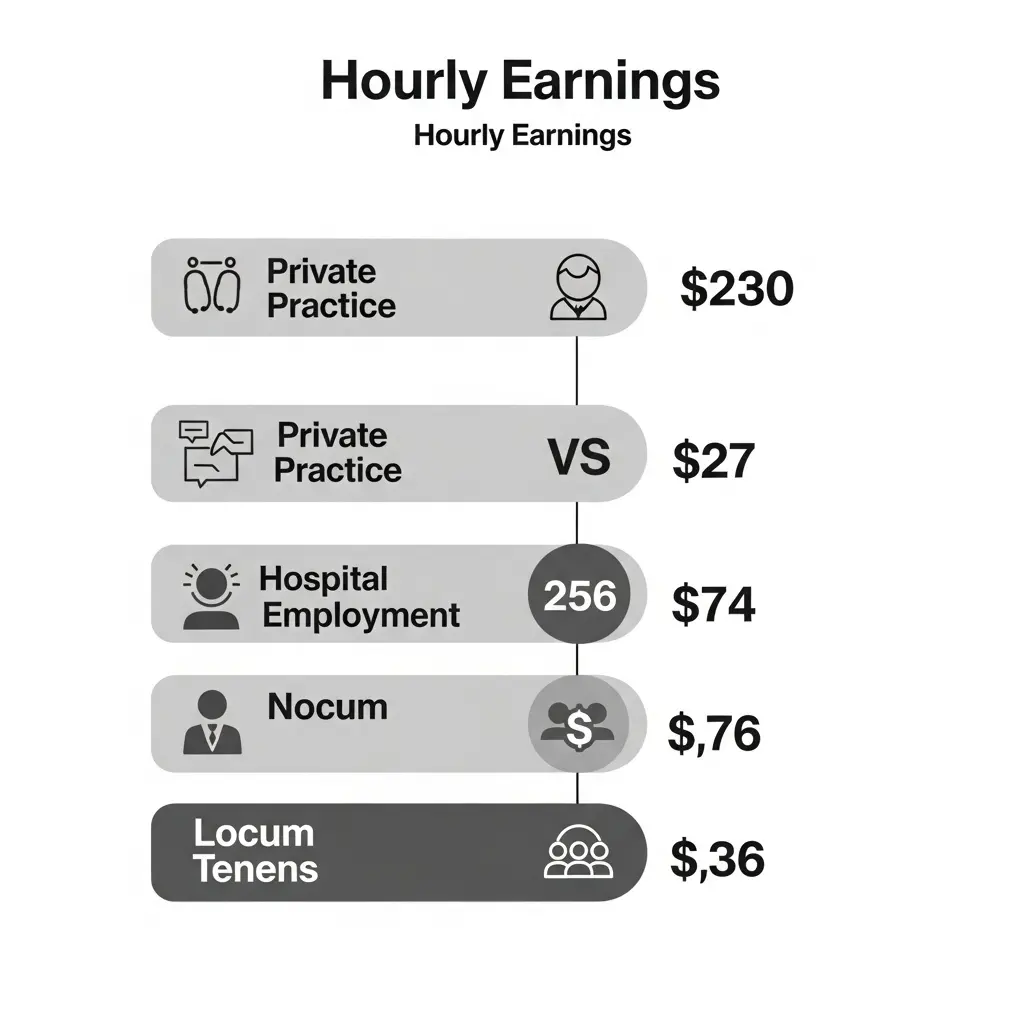
Where a doctor works also affects their earnings:
- Private Practice: Doctors can set their own rates but income may fluctuate depending on patient flow and operating expenses.
- Hospital Employment: Doctors typically receive fixed salaries which provide stability but may limit earning potential compared to private practice.
- Locum Tenens (Temporary Assignments): These positions often pay higher hourly rates due to the urgent need for coverage, making them attractive for doctors who prefer flexible schedules.
Hidden Side of Doctor’s Hourly Pay
It’s important to note that calculating hourly pay for doctors is not always simple. Unlike hourly jobs, physicians often:
- Work long shifts including nights and weekends
- Handle administrative tasks and paperwork outside patient hours
- Spend time on continuing education and training
- Pay high costs for malpractice insurance, licensing and professional memberships
So while the headline hourly rate looks very high, the actual “take-home” income can be lower after expenses, taxes and unpaid time commitments.
Conclusion:
When examining average hourly earnings of doctors. it becomes clear that while the profession is financially rewarding, the income is far from uniform. Specialty choice is the most decisive factor with highly skilled surgeons and specialists earning much more than general practitioners or family doctors. Location and demand also influence salaries, as doctors practicing in high cost cities or underserved rural regions often see higher hourly pay.
At the same time, a physician’s experience and reputation play a crucial role since seasoned doctors with years of practice or private clinics can command premium rates. Additionally, the work setting and employment type whether hospital based, private practice or locum tenens directly affects stability and earnings.
Finally, it’s important to acknowledge the hidden side of doctor’s hourly pay where long hours, administrative work and overhead costs reduce the take home value. Ultimately while doctors may earn impressive hourly rates, their income reflects years of training, dedication and the immense responsibility of caring for human lives.
Q: What are the average hourly earnings of doctors?
A: On average, doctors in the U.S. earn between $90 and $200 per hour, though this varies based on specialty, location and work setting.
Q: Does location and demand affect doctor earnings?
A: Yes. Doctors in high-cost states like California or New York may earn more while rural areas sometimes offer higher hourly pay or incentives to attract physicians.
Q: How does specialty impact a doctor’s hourly income?
A: Specialists such as surgeons, anesthesiologists and cardiologists often earn $150–$300+ per hour while primary care physicians typically earn $90–$120 per hour.
Q: What is the hidden side of doctor’s hourly pay?
A: Despite high earnings, many doctors work long hours, handle administrative tasks and pay for expenses like malpractice insurance reducing their actual take-home pay.