In the worlds of construction, warehousing, maintenance and even retail working at height is a common necessity.
Whether you are changing a light bulb in a warehouse, painting a high wall, installing shelving or performing complex electrical work having the right equipment is not just a matter of convenience. it’s a matter of safety and efficiency. For decades, ladders were the go to solution. But they come with significant limitations: instability, limited workspace and the constant need to descend and move them.
Enter the Adjustable Work Platform a game changing piece of equipment that has revolutionized how professionals and DIY enthusiasts approach tasks at elevation. This isn’t just a fancy ladder; it’s a comprehensive solution designed to create a stable, secure and spacious temporary workspace. In this comprehensive guide, we will dive deep into what adjustable work platforms are their different types, key benefits, applications and crucial safety tips.

What Exactly is an Adjustable Work Platform?
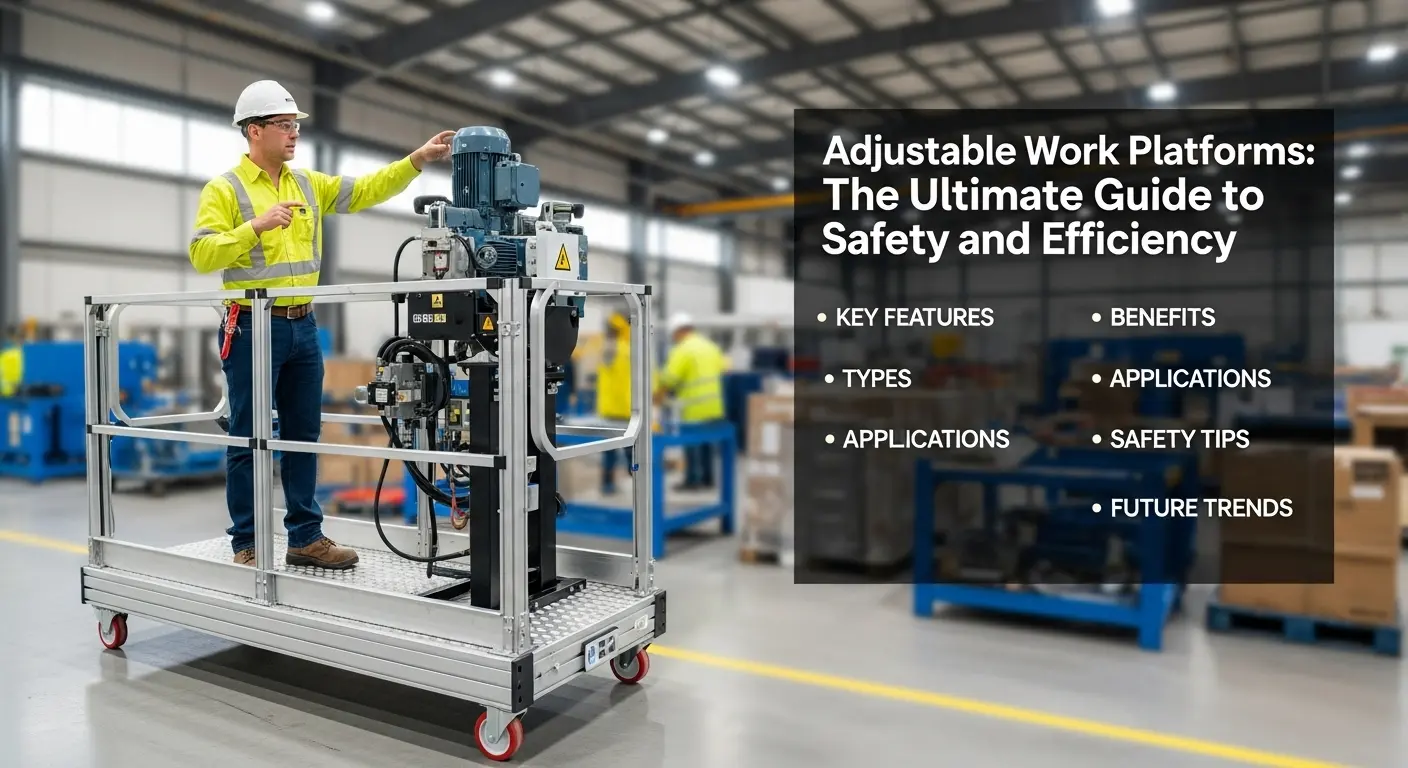
An adjustable work platform is a mobile, free standing structure that provides a large, stable surface to work on. Unlike a ladder where you stand on a rung, a work platform gives you an entire deck to stand, kneel and place your tools and materials. The key feature is its adjustability; the height of the deck can be raised or lowered to suit the specific task at hand. Most models are mounted on wheels with locking casters, allowing for easy movement around a worksite.
They are engineered for stability, often with a wide base and a deck that remains horizontal at all heights. This design drastically reduces the risk of tipping and falls, making them a far safer alternative for prolonged tasks.
Types of Adjustable Work Platforms
Not all work platforms are created equal. They come in various designs to cater to different needs and environments. Understanding the types will help you choose the perfect one for your job.
1. Scissor Lift Tables
One of the most widely used adjustable work platforms is the scissor lift which operates through a linked, folding “scissor” mechanism that raises and lowers the platform vertically. These lifts can be powered hydraulically using a pump or electric motor or pneumatically depending on the application. Scissor lifts are best suited for tasks that require a broad, stable working surface and the ability to lift heavy loads safely. They are commonly used in warehouses for loading and unloading, stock picking, equipment servicing and routine maintenance tasks.
2. Boom Lifts (Articulating and Telescopic)
Although often treated as a separate category, boom lifts are actually a highly advanced type of adjustable work platform. They are equipped with a long arm (or boom) that extends vertically and horizontally with many models including an articulating joint for precise maneuverability in tight or hard to reach spaces.
This makes them ideal for jobs requiring access over obstacles such as electrical installations on high ceilings, window cleaning on tall buildings or professional tree trimming. Their key advantage is unmatched reach and flexibility, though they are more complex to operate, require significant space and usually come at a higher cost.
3. Mobile Scaffolding Towers
Modular scaffolding platforms are lightweight yet durable structures typically built from aluminum or steel, designed for flexibility and stability. They are assembled using frames, cross braces and a wide working platform, allowing adjustments in height by repositioning locking casters on different rungs or by adding and removing sections.
These platforms are best suited for construction, painting, drywall installation and other long duration projects that require a spacious, stable surface at a fixed height. Their main advantages include highly customizable height, a large work area and capacity for multiple workers, though they require more time to assemble and are less mobile compared to unified scissor lifts.
4. Low-Level Access Platforms
Step platforms are smaller and simpler versions of adjustable platforms, designed for quick access to areas slightly beyond comfortable reach from the floor. They are often seen as a safer more stable replacement for the traditional stepladder.
Lightweight and compact. they are perfect for retail stores, libraries, homes and light industrial settings where tasks such as changing light bulbs reaching top shelves or handling small repair jobs are common. Their advantages include exceptional portability, affordability and easy maneuverability through standard doorways though they offer only limited height reach compared to larger adjustable platforms.
Adjustable Work Platforms
Key Benefits of Using an Adjustable Work Platform
Why should you consider investing in or renting one of these platforms? The advantages are numerous.
1. Enhanced Safety
Perhaps the most significant benefit of adjustable work platforms is the enhanced safety they provide compared to ladders or makeshift solutions. Their wide, stable base eliminates the wobbling sensation often experienced on ladders, giving workers greater confidence while performing elevated tasks.
Most models are equipped with guardrails that serve as a critical barrier against accidental falls. In addition the spacious deck area allows workers to move freely, maintain proper balance and avoid dangerous overreaching. This combination of stability, protection and comfort directly helps reduce workplace accidents and injuries.
2. Unmatched Efficiency and Productivity
One of the biggest advantages of adjustable work platforms is the significant boost in productivity they provide. Time is money and unlike traditional ladders where workers must constantly climb up and down to retrieve tools or materials. these platforms allow everything to be kept with in easy reach on the spacious deck.
Many models also feature wheels or casters, enabling the entire unit to be rolled to a new position within seconds without the need for disassembly. This combination of convenience and efficiency translates into faster task completion and measurable productivity gains.
3. Improved Ergonomics and Worker Comfort
Another major benefit of adjustable work platforms is their strong focus on ergonomics and worker comfort. Standing for long periods on the narrow rungs of a ladder is tiring, uncomfortable, and places unnecessary stress on the joints and lower back. By contrast, a wide, solid platform provides a secure surface where workers can stand, kneel or even sit while performing tasks.
This versatility reduces physical strain, minimizes fatigue and helps prevent musculoskeletal disorders. The result is a healthier more comfortable and more focused workforce that can maintain efficiency throughout the day.
4. Versatility Across Industries
From a mechanic working under a vehicle (using a vehicle lift platform) to a stage crew adjusting lights in a theater. these platforms have applications in virtually every industry. Their adjustable nature makes them a one stop solution for a wide range of height based tasks.
5. Cost-Effectiveness
Although adjustable work platforms may require a higher initial investment compared to a standard ladder, the long term return on investment is undeniable. Their superior safety reduces the likelihood of workplace accidents which in turn helps lower insurance costs and workers’ compensation claims.
At the same time, the productivity gains achieved by faster more efficient work directly add value to every project. Built from durable materials, these platforms are designed to withstand years of heavy use, making them a smarter, more cost effective financial decision in the long run.
Applications and Use Cases
Warehousing & Logistics: Order picking, inventory management, equipment maintenance and loading/unloading trucks.
Construction & Painting: Drywall installation, ceiling work, painting high walls and electrical fitting.
Retail & Hospitality: Stocking high shelves, changing signage, cleaning light fixtures and decorative installation.
Manufacturing: Assembly line tasks, machine maintenance and parts installation.
Facilities Management: HVAC repair, light bulb replacement, plumbing work and general building maintenance.
https://flexdecks.com/platforms/adjustable-work-platforms
Essential Safety Tips for Using Adjustable Work Platforms
Even the safest equipment requires responsible use.
Training is Mandatory: Never operate a powered platform without proper training. Understand all controls and safety features.
Inspect Before Use: Always conduct a pre use inspection. Check for hydraulic leaks, damaged components and fully functional brakes and guardrails.
Mind the Weight Capacity: Never exceed the manufacturer’s stated maximum load capacity. This includes the weight of workers, tools and materials.
Work on a Stable Surface: Only use the platform on a firm, level and stable surface. Engage all wheel locks before elevating the platform.
Avoid Overreaching: Always keep your center of gravity within the platform rails. If you can’t reach, don’t lean instead, lower the platform and move it.
Use Personal Protective Equipment (PPE): Continue to use appropriate PPE, such as a hard hat and non slip foot wear.
Conclusion
The adjustable work platform is more than just a tool; it’s a fundamental shift towards a safer, smarter and more efficient way of working at height. By moving beyond the limitations of the ladder, businesses and individuals can protect their most valuable assets their people. while simultaneously boosting their bottom line through enhanced productivity. Whether you are a professional contractor or a dedicated DIYer, investing in the right adjustable work platform is an investment in safety, quality and peace of mind.
Before you make a purchase, assess your specific needs: the required working height, weight capacity and the environment you will be using it in. And remember, when in doubt, always prioritize safety and training.
Q: What is an adjustable work platform?
A: An adjustable work platform is a stable, elevated surface that can be raised or lowered to the required height for tasks above ground level. Unlike ladders, it offers better stability more working space and increased safety.
Q: Which type is best for small spaces?
A: Step platforms or rolling platforms are ideal for compact spaces since they are lightweight, portable and easy to maneuver.
Q: Do adjustable platforms really improve productivity?
A: Yes. Workers can keep tools and materials on the platform, reducing time wasted climbing up and down ladders and mobile platforms can be repositioned quickly without disassembly.
Q: Where are adjustable work platforms commonly used?
A: They are widely used in construction, warehouses, aviation, manufacturing, retail and even home projects. Their versatility makes them valuable across industries.